Scaling AI Without Scaling Cost: The Case for Model Orchestration

Joseph John
CEO
What many organizations discover too late is that scaling AI linearly—by simply calling the same large model more often—creates a cost curve that grows faster than business value. If left unchecked, AI turns from a competitive advantage into a budgetary concern. That is not a model problem. It is an architecture problem.
Scaling AI Without Scaling Cost: The Case for Model Orchestration
By Joseph John
Over the last year, I’ve seen a pattern repeat itself across enterprises that are serious about AI. The technology works. The pilots succeed. Business teams get excited. And then, quietly, cost becomes the conversation nobody wants to lead with.
AI doesn’t usually fail because it cannot deliver intelligence. It fails because it delivers intelligence in an economically unsustainable way.
What many organizations discover too late is that scaling AI linearly—by simply calling the same large model more often—creates a cost curve that grows faster than business value. If left unchecked, AI turns from a competitive advantage into a budgetary concern. That is not a model problem. It is an architecture problem.
From my perspective, the only viable way to scale AI without scaling cost is through model orchestration.
Why Cost Explodes When AI Scales
Most early AI deployments are built around a single model. It is usually the most capable model available at the time, selected because it performs well across demos and proofs of concept. That choice makes sense initially. But when AI moves from experimentation into production, usage patterns change dramatically.
Suddenly, the model is no longer answering a few test questions. It is processing thousands of documents, supporting multiple departments, handling edge cases, and operating continuously. Every request consumes tokens, compute, and infrastructure resources. Context windows grow. Retrieval expands. Retries multiply.
The result is predictable. AI usage scales, but cost scales faster.
What makes this particularly dangerous is that the cost is often invisible until it becomes material. Token usage feels abstract. Inference calls are cheap individually. But at enterprise volume, small inefficiencies compound quickly.
The Fallacy of the “Best Model Everywhere” Approach
One of the most common mistakes I see is the assumption that the best model should be used for every task. In reality, enterprise AI workloads are highly heterogeneous.
Document classification, data extraction, summarization, complex reasoning, policy interpretation, and decision validation are very different tasks. They do not require the same level of intelligence, context, or compute.
Using a premium reasoning model to classify invoices or detect document types is like using a supercomputer to send emails. It works, but it is economically irrational.
The goal of enterprise AI is not to maximize intelligence per request. It is to apply the right level of intelligence at the right cost.
What Model Orchestration Actually Changes
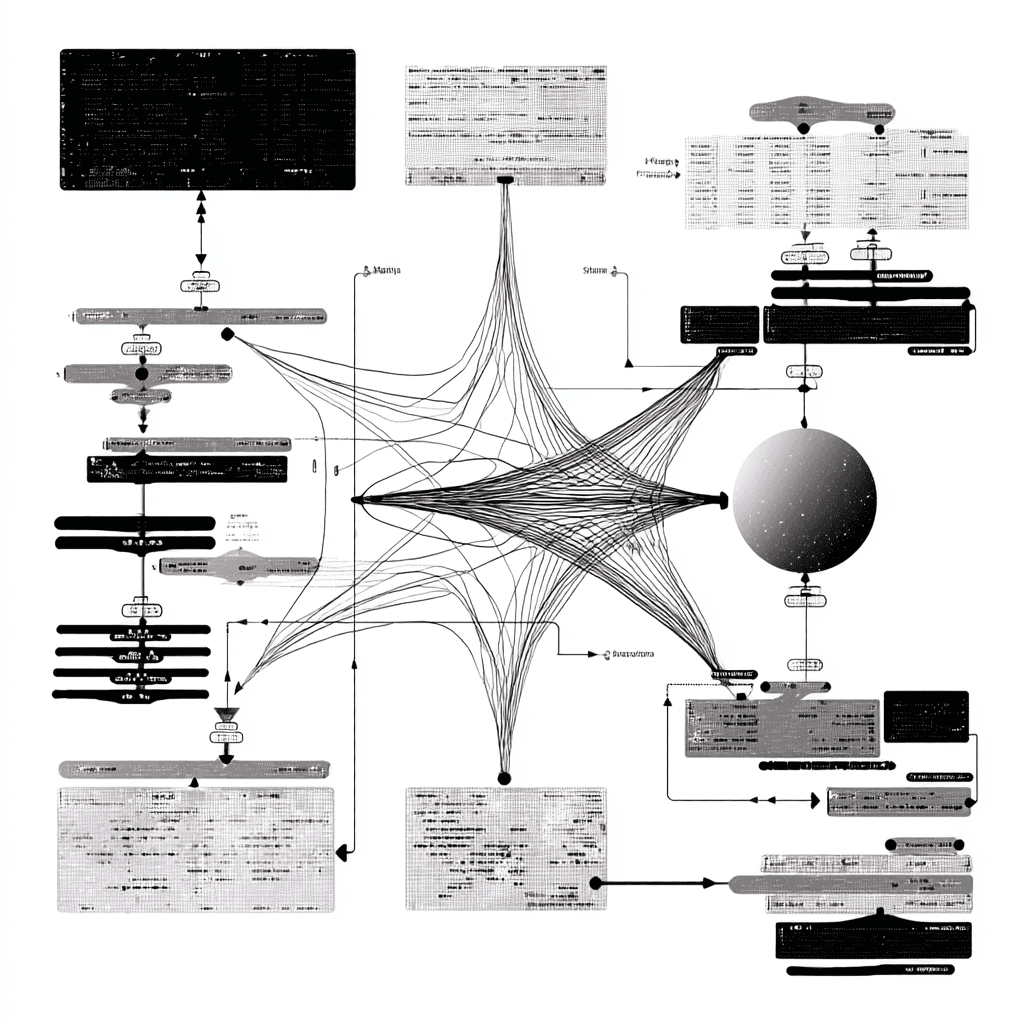
Model orchestration introduces intent and discipline into how AI is used. Instead of invoking a single model blindly, the system decomposes a request, evaluates its complexity, sensitivity, and business value, and routes it to the most appropriate model.
Simple, high-volume tasks are handled by lightweight or specialized models. More complex reasoning is reserved for advanced models. Only a small percentage of cases—those that truly matter—consume premium inference.
This approach does more than reduce cost. It improves system stability, increases throughput, and creates predictable economics. AI stops behaving like an open-ended expense and starts behaving like a controllable operating capability.
Why Orchestration Is a Leadership Decision
Model orchestration is often discussed as a technical optimization. In reality, it is a strategic choice.
From a leadership standpoint, orchestration determines whether AI spend is intentional or accidental. It creates a mechanism to align AI usage with business value, regulatory requirements, and budget constraints.
It also future-proofs the organization. Models will change. Pricing will change. Capabilities will evolve. When orchestration is in place, adopting a new model or responding to a pricing shift becomes a routing decision—not a re-architecture exercise.
Cost Control Without Compromising Capability
One concern I often hear is that cost control means sacrificing quality. In practice, the opposite is true.
When orchestration is implemented correctly, enterprises get better outcomes. High-value decisions receive more attention and higher-quality reasoning. Low-value tasks are processed efficiently and consistently. Humans are involved only when confidence drops or risk rises.
This is how AI scales responsibly.
The Long-Term Impact
The enterprises that succeed with AI over the next few years will not be the ones with the biggest models. They will be the ones with the most disciplined architectures.
Model orchestration turns AI from a blunt instrument into a precision tool. It ensures that intelligence compounds while cost remains bounded. It enables scale without fear.
From where I sit, this is not an optimization. It is a prerequisite.
If enterprises want AI to move beyond pilots and become a permanent operating capability, they must stop thinking in terms of models and start thinking in terms of orchestration.
That is how AI scales—without scaling cost.
Let’s keep in touch.
Discover more about how Altolabs can empower your Enterprise, follow us in LinkedIn or send us an email.


